Box and whisker plots are a type of graphical representation used to display the distribution of data. They are commonly used in statistics and data analysis to visualize the median, quartiles, and outliers of a dataset. These plots are particularly useful when comparing the distribution of data across different groups or categories. However, reading and interpreting box and whisker plots can be challenging, especially for those who are new to data analysis.
To overcome this challenge, it’s essential to have a solid understanding of how to read a box and whisker plot worksheet. This involves identifying the different components of the plot, understanding what each component represents, and being able to interpret the data effectively. With practice and patience, anyone can become proficient in reading and analyzing box and whisker plots. In this guide, we’ll take you through the steps to read a box and whisker plot worksheet and provide you with the skills and confidence to work with these complex plots.
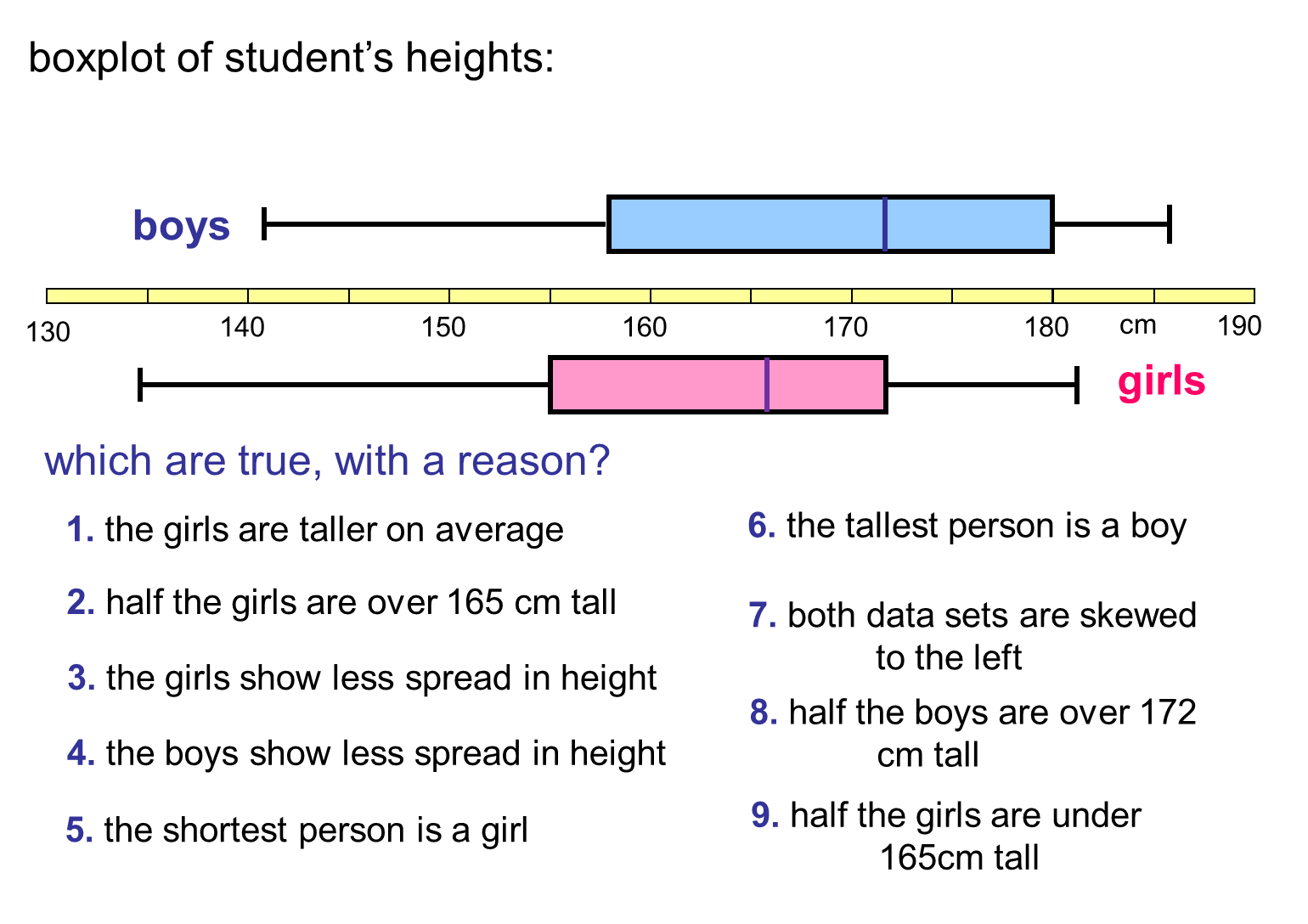
Box And Whisker Plots CK 12 Foundation
Understanding the Basics of Box and Whisker Plots
The first step in reading a box and whisker plot is to understand the basics of the plot. The plot typically consists of a box, which represents the interquartile range (IQR), and two whiskers, which extend from the box to show the range of the data. The box itself is divided into two parts, with the line inside the box representing the median of the data. The whiskers are usually bounded by the minimum and maximum values of the data, unless there are outliers, in which case the whiskers will extend to a maximum of 1.5 times the IQR.
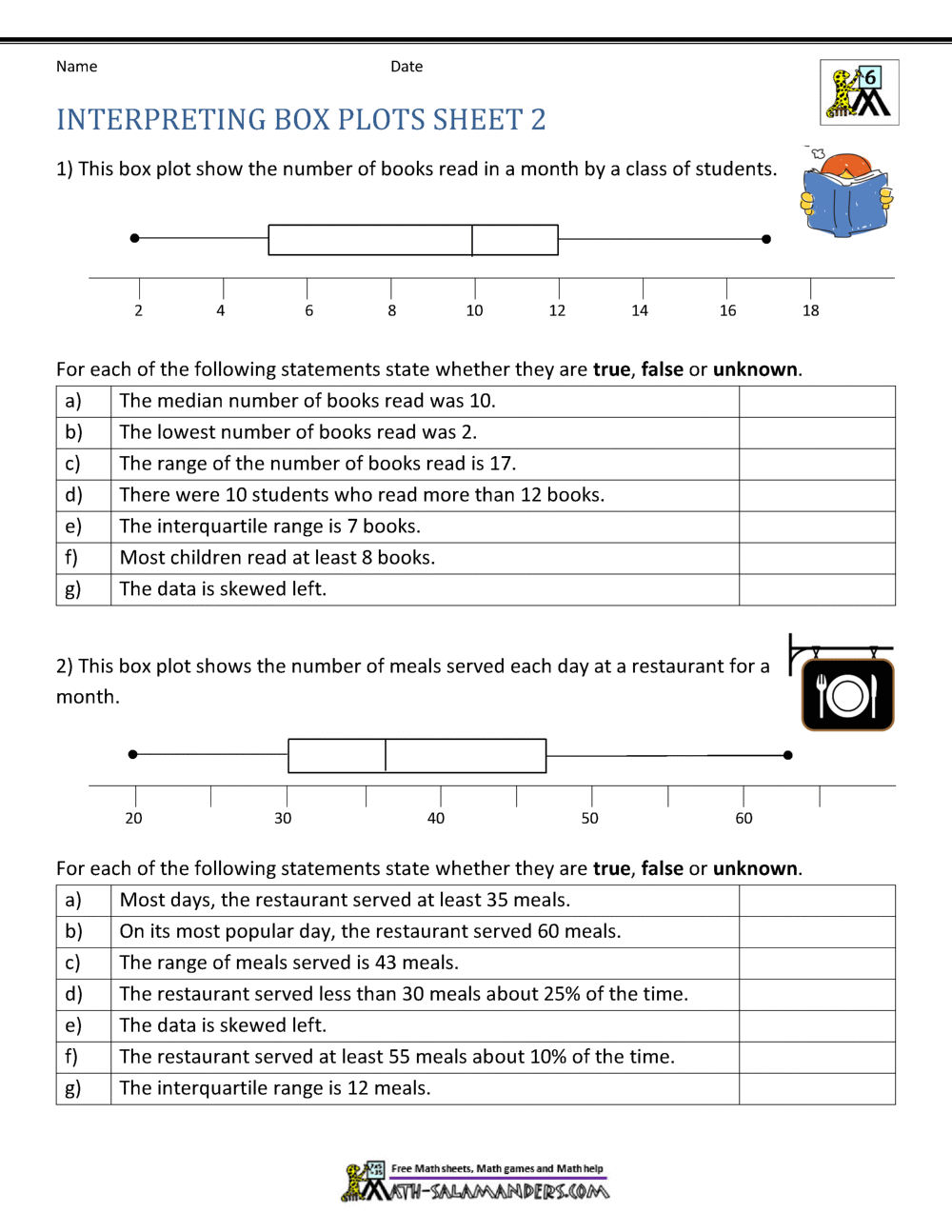
Box Plot Worksheets
Identifying Key Components of the Plot
Once you have a good understanding of the basics, the next step is to identify the key components of the plot. These include the median, the quartiles (Q1 and Q3), and any outliers. The median is the middle value of the data, while the quartiles represent the 25th and 75th percentiles. Outliers are data points that fall outside the range of the whiskers and can indicate unusual patterns or errors in the data. By identifying these components, you can begin to interpret the data and understand the distribution of the values.
Interpreting Data from the Plot
Interpreting data from the plot involves comparing the distribution of the data across different groups or categories. This can be done by comparing the median, quartiles, and outliers of each group. For example, if the median of one group is higher than another, it may indicate a difference in the central tendency of the data. Similarly, if one group has more outliers than another, it may indicate a difference in the variability of the data. By comparing these components, you can gain insights into the relationships between the data and make informed decisions.
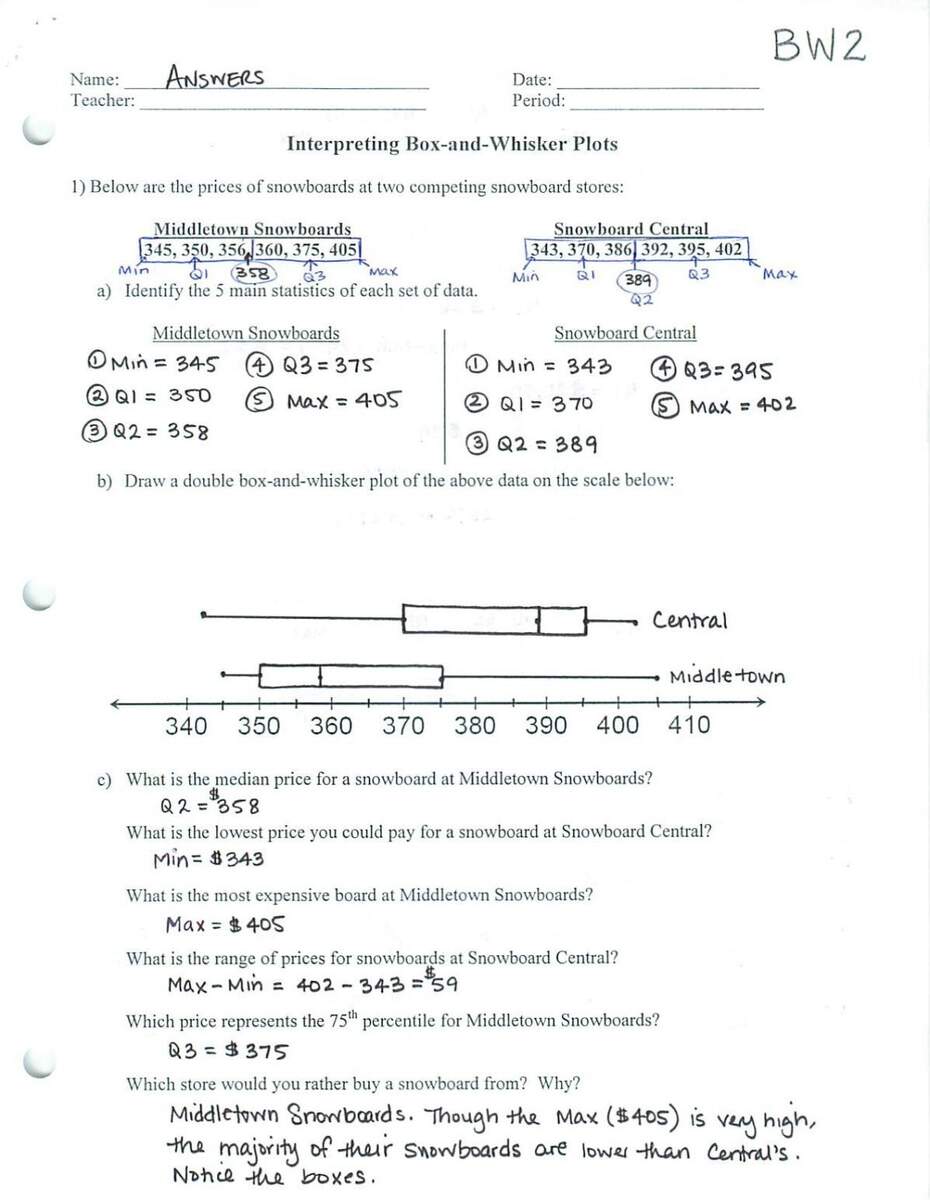
Interpreting Box And Whisker Plots Worksheet BW2
In conclusion, reading a box and whisker plot worksheet requires a combination of understanding the basics, identifying key components, and interpreting the data. With practice and experience, you can become proficient in working with these plots and gain valuable insights into the distribution of data. Whether you’re a student, researcher, or professional, mastering box and whisker plots can help you to communicate complex data in a clear and concise manner, and make informed decisions based on data-driven insights.
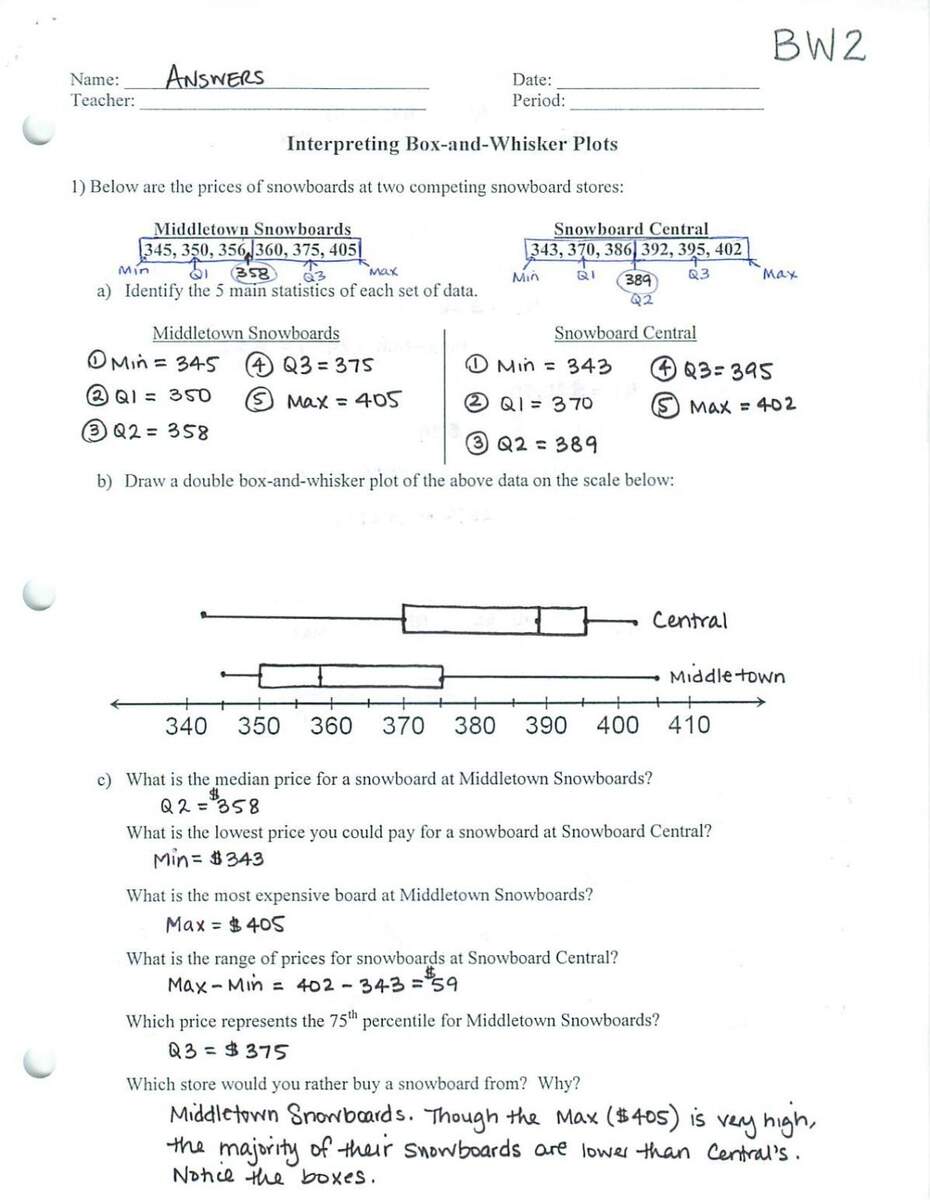
Interpreting Box And Whisker Plots Worksheet BW2
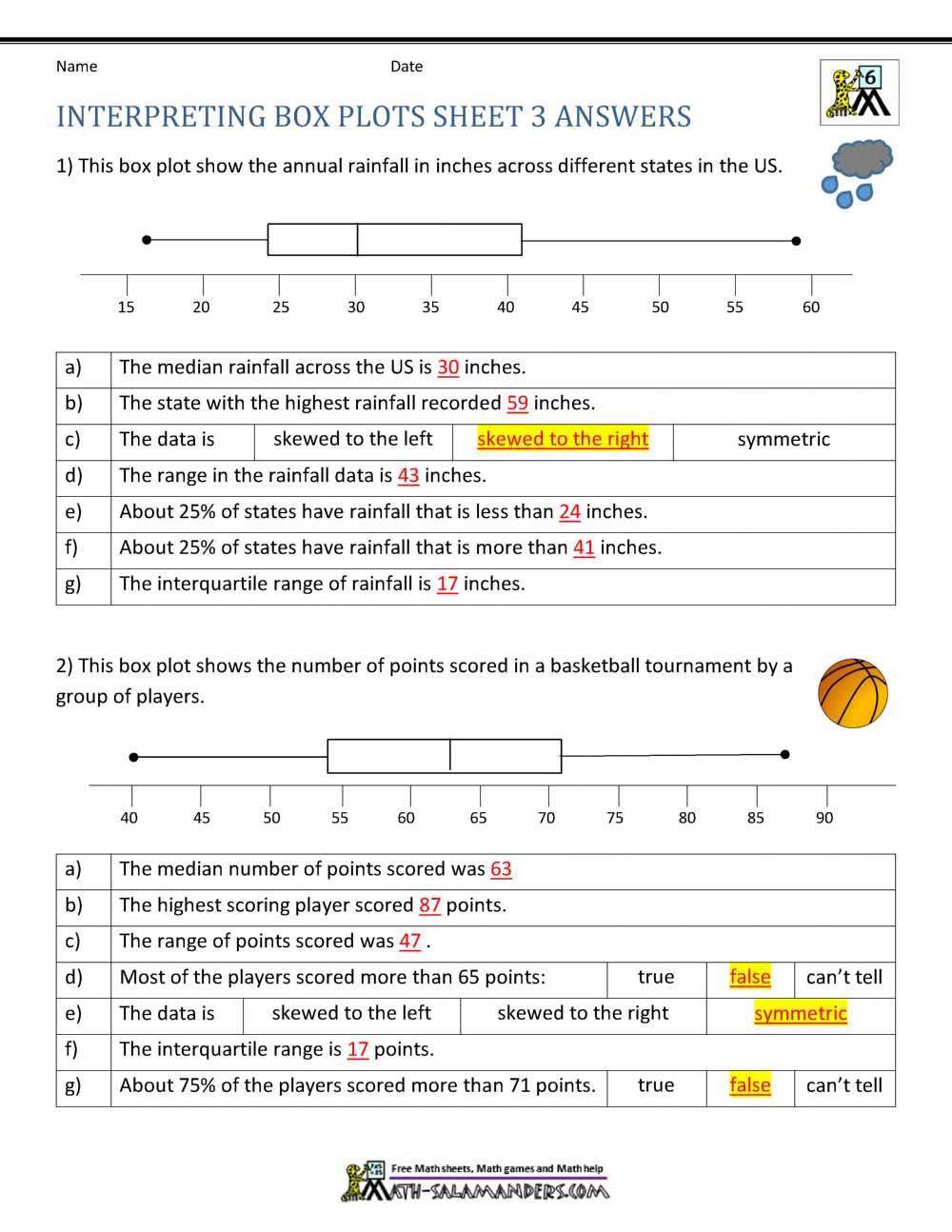
Box Plot Worksheets